Radar geo-warping is the adjustment of geo-referenced radar images and video data to be consistent with a geographical projection. This image warping avoids any restrictions when displaying it together with video from multiple radar sources or with other geographical data including scanned maps and satellite images which may be provided in a particular projection. There are many areas where geo warping has unique benefits: Single radar video signal displayed together with maps of different geographical projections. E.g. Mercator UTM stereographic Multiple radar video signals displayed simultaneously: Having the computing power to do so on one computer. Adapting the projection of all radar signals allowing the geographically correct display and accurate superimposition of those videos. Slant range correction: a modern 3D radar system can measure the height of a target and hence it is possible to correct the radar video by the real corrected range of the target. Slant Range Correction also allows to compensate the radar tower height e.g. for maritime surveillance radars. == Introduction == Radar video presents the echoes of electromagnetic waves a radar system has emitted and received as reflections afterwards. These echoes are typically presented on a computer screen with a color-coding scheme depicting the reflection strength. Two problems have to be solved during such a visualization process. The first problem arises from the fact that typically the radar antenna turns around its position and measures the reflection echo distances from its position in one direction. This effectively means that the radar video data are present in polar coordinates. In older systems the polar oriented picture has been displayed in so called plan position indicators (PPI). The PPI-scope uses a radial sweep pivoting about the center of the presentation. This results in a map-like picture of the area covered by the radar beam. A long-persistence screen is used so that the display remains visible until the sweep passes again. Bearing to the target is indicated by the target's angular position in relation to an imaginary line extending vertically from the sweep origin to the top of the scope. The top of the scope is either true north (when the indicator is operated in the true bearing mode) or ship's heading (when the indicator is operated in the relative bearing mode). For visualization on a modern computer screen the polar coordinates have to be converted into Cartesian coordinates. This process called radar scan conversion is presented with more detail in the next section. The second problem to solve arises from the fact that a radar system is placed in the real world and measures real world echo positions. These echoes have to be displayed together with other real world data like object positions, vector maps and satellite images in a consistent way. All this information refers to the curved earth surface but is displayed on a flat computer display. Building a link from real world earth positions to display pixels is commonly called geographical referencing or in short geo-referencing. Part of the geo-referencing process is to map the 3D earth surface onto a 2D display. This process of a geographical projection can be performed in many ways, but different data sources have their own 'natural' projection. E.g. Cartesian radar video data from a radar source on the earth surface are geo-referenced by a so-called radar projection. When using this radar projection the Cartesian radar video pixels can directly displayed on a computer screen (only being linearly transformed according to the current position on the screen and e.g. the current zoom level). A problem now arises if e.g. also a satellite map shall be shown together with the radar video data. The 'natural' geographical projection of a satellite image would be a satellite projection which depends on the satellite orbit, position and further parameters. Now either the satellite image has to be reprojected to a radar projection or the radar video has to use the satellite projection. This geographical re-projection is also called geographical warping or Geo Warping where each image pixel has to be transformed from one projection into another. This article describes in further detail the Geo Warping of radar video images in real time. It will also show that radar video Geo Warping is done most efficiently when it is integrated with the radar scan conversion process. == Radar-scan conversion == This section describes the principles of the radar-scan conversion (RSC) process. The radar supplies its measured data in polar coordinates (ρ,θ) directly from the rotating antenna. ρ defines the target/echo distance and θ the target angle in polar world coordinates. These data are measured, digitized and stored in a polar coordinate polar store or polar pixmap. The main RSC task is to convert these data to Cartesian (x, y) display coordinates, creating the necessary display pixels. The RSC process is influenced by the current zoom, shift and rotation settings defining which part of the 'world' shall be visible in the display image. As detailed later the RSC process also takes the currently used geographical projection into account when the radar video images are Geo Warped. The OpenGL RSC is implemented using a reverse scan conversion approach which calculates for every image pixel the most appropriate radar amplitude value in the polar store. This approach generates an optimal image without any artifacts known from forward spoke fill algorithms. By applying bi-linear filtering between adjacent pixels in the polar store during the conversion process the OpenGL RSC finally achieves a very high visual quality radar display image for every zoom level, creating smooth images of the radar echoes. == Radar projection == This section illustrates how radar video data are geo referenced and displayed on a computer screen. The radar sensor is positioned on the earth surface with a height h above the ground. It measures the direct distance d to the target (and not e.g. the distance the target is away from the radar if one would move on the earth surface). This distance is then used in the display plane after adjustment to the current display zoom level by the radar scan converter (RSC). Now it has to be clarified how the radar video data is geo referenced. This basically means, that if we want to display a geographical real world object (like e.g. a light house) which is at the same real world position as the radar target, that it also shall appear at the same position in the display plane. This is realized by calculating the distance from the radar sensor to the respective real world object and use that distance in the display plane. The position of the real world object is typically given in geographical coordinates (latitude, longitude and height above the earth surface). In other words, using a radar projection with geographical data is done by simulating a radar measurement process with the real world objects and use the resulting range and azimuth in the display plane. The second picture to the right shows an example radar projection with the center of projection (COP) at latitude 50.0° and longitude 0.0° which is also the radar position. The dashed lines are the equal-latitude and equal-longitude lines on top of the background map. The solid lines show equal-range and equal-azimuth with the respect to the radar position. It is a feature of the radar projection that equal-range lines are circles and equal-azimuth lines are straight lines. This is necessary to display radar video consistently with other map data when using a radar projection where the projection center has to be the radar position. == Geo Warping process == This section explains the actual geo warping or re-projection process when applied to radar video in real time. Assume we want to display radar video on top of a satellite image. As an example we use the CIB projection which is used to display satellite data in CIB (Controlled Image Base) format. The Figure Geo Warping Radar to CIB Projection shows dashed the maximal range circle for a range of 111 km or 60 miles using the radar projection. Such a range is typical for long range coastal surveillance radars. As stated in the last section this is a perfect circle also on the computer screen. The solid line ellipse shows the same range circle for the CIB projection. Typically the errors occurring without Geo Warping are smallest near the radar position if at least the projection center (COP) coincides with the radar position, as realized in our example. Otherwise the error distribution depends both on the used projection and also on the projection parameters. Thus, in our case the errors are most significant near the maximum radar range. The CIB projection error corrected in east–west direction at half the radar range is 2.6 km and is 5.3 km at the full radar range of 111 km. An error of 5.3 km is
International Speech Communication Association
The International Speech Communication Association (ISCA) is a non-profit organization and one of the two main professional associations for speech communication science and technology, the other association being the IEEE Signal Processing Society. == Purpose == The purpose of the International Speech Communication Association (ISCA) is to promote the study and application of automatic speech processing, including speech recognition and synthesis, as well as related areas such as speaker recognition and speech compression. The association's activities cover all aspects of speech processing, including computational, linguistic, and theoretical aspects. The primary goal of the International Speech Communication Association (ISCA) is to advance the field of automatic speech processing and communication technology through research, education, and collaboration. By promoting the study and application of speech technologies such as speech recognition, speech synthesis, speaker recognition, and speech compression, ISCA aims to foster innovation and development in the areas of human-computer interaction, telecommunications, and multimedia applications. ISCA serves as a platform for researchers, academics, industry professionals, and students to exchange knowledge, share best practices, and foster interdisciplinary dialogue in the field of speech communication science. Through conferences, workshops, publications, and educational initiatives, ISCA seeks to enhance the understanding of speech processing mechanisms, improve the accuracy and efficiency of speech technologies, and explore new frontiers in the realm of human language communication. Furthermore, ISCA plays a crucial role in promoting international collaboration and networking among professionals in the speech communication community. By facilitating partnerships and cooperation between individuals and organizations worldwide, ISCA seeks to drive global progress in speech technology research and application, ultimately contributing to the advancement of communication systems, accessibility tools, and interactive interfaces that benefit society as a whole. == Conferences == ISCA organizes yearly the Interspeech conference. Most recent Interspeech: 2013 Lyon, France 2014 Singapore 2015 Dresden, Germany 2016 San Francisco, US 2017 Stockholm, Sweden 2018 Hyderabad, India 2019 Graz, Austria 2020 Shanghai, China (fully virtual) 2021 Brno, Czechia (hybrid) 2022 Incheon, South Korea 2023 Dublin, Ireland 2023 Kos Island, Greece Forthcoming Interspeech: 2025 Rotterdam, the Netherlands == ISCA board == The ISCA president for 2023-2025 is Odette Scharenborg. The vice president is Bhuvana Ramabhadran and the other members are professionals in the field. == History of ISCA == The precursor to Interspeech was a conference called Eurospeech, first held in 1989 and organised by Jean-Pierre Tubach. It was the conference of the European Speech Communication Association (ESCA), itself the precursor of the International Speech Communication Association (ISCA). A year later another conference on speech science and technology was started: the International Conference on Spoken Language Processing (ICSLP), which was founded in 1990 by Hiroya Fujisaki. The first ISCA (vs. ESCA) event was the merging of Eurospeech and ICSLP to create ICSLP-Interspeech, held in Beijing, China in 2000. This was followed by Eurospeech-Interspeech, which was held in Aalborg, Denmark in 2001. In 2007, the Eurospeech and ICSLP parts of the conference names were dropped and Interspeech became the name of the yearly conference (first Interspeech location: Antwerp, Belgium).
Noise-based logic
Noise-based logic (NBL) is a class of multivalued deterministic logic schemes, developed in the twenty-first century, where the logic values and bits are represented by different realizations of a stochastic process. The concept of noise-based logic and its name was created by Laszlo B. Kish. In its foundation paper it is noted that the idea was inspired by the stochasticity of brain signals and by the unconventional noise-based communication schemes, such as the Kish cypher. == The noise-based logic space and hyperspace == The logic values are represented by multi-dimensional "vectors" (orthogonal functions) and their superposition, where the orthogonal basis vectors are independent noises. By the proper combination (products or set-theoretical products) of basis-noises, which are called noise-bit, a logic hyperspace can be constructed with D(N) = 2N number of dimensions, where N is the number of noise-bits. Thus N noise-bits in a single wire correspond to a system of 2N classical bits that can express 22N different logic values. Independent realizations of a stochastic process of zero mean have zero cross-correlation with each other and with other stochastic processes of zero mean. Thus the basis noise vectors are orthogonal not only to each other but they and all the noise-based logic states (superpositions) are orthogonal also to any background noises in the hardware. Therefore, the noise-based logic concept is robust against background noises, which is a property that can potentially offer a high energy-efficiency. == The types of signals used in noise-based logic == In the paper, where noise-based logic was first introduced, generic stochastic-processes with zero mean were proposed and a system of orthogonal sinusoidal signals were also proposed as a deterministic-signal version of the logic system. The mathematical analysis about statistical errors and signal energy was limited to the cases of Gaussian noises and superpositions as logic signals in the basic logic space and their products and superpositions of their products in the logic hyperspace (see also. In the subsequent brain logic scheme, the logic signals were (similarly to neural signals) unipolar spike sequences generated by a Poisson process, and set-theoretical unifications (superpositions) and intersections (products) of different spike sequences. Later, in the instantaneous noise-based logic schemes and computation works, random telegraph waves (periodic time, bipolar, with fixed absolute value of amplitude) were also utilized as one of the simplest stochastic processes available for NBL. With choosing unit amplitude and symmetric probabilities, the resulting random-telegraph wave has 0.5 probability to be in the +1 or in the −1 state which is held over the whole clock period. == The noise-based logic gates == Noise-based logic gates can be classified according to the method the input identifies the logic value at the input. The first gates analyzed the statistical correlations between the input signal and the reference noises. The advantage of these is the robustness against background noise. The disadvantage is the slow speed and higher hardware complexity. The instantaneous logic gates are fast, they have low complexity but they are not robust against background noises. With either neural spike type signals or with bipolar random-telegraph waves of unity absolute amplitude, and randomness only in the sign of the amplitude offer very simple instantaneous logic gates. Then linear or analog devices unnecessary and the scheme can operate in the digital domain. However, whenever instantaneous logic must be interfaced with classical logic schemes, the interface must use correlator-based logic gates for an error-free signal. == Universality of noise-based logic == All the noise-based logic schemes listed above have been proven universal. The papers typically produce the NOT and the AND gates to prove universality, because having both of them is a satisfactory condition for the universality of a Boolean logic. == Computation by noise-based logic == The string verification work over a slow communication channel shows a powerful computing application where the methods is inherently based on calculating the hash function. The scheme is based on random telegraph waves and it is mentioned in the paper that the authors intuitively conclude that the intelligence of the brain is using similar operations to make a reasonably good decision based on a limited amount of information. The superposition of the first D(N) = 2N integer numbers can be produced with only 2N operations, which the authors call "Achilles ankle operation" in the paper. == Computer chip realization of noise-based logic == Preliminary schemes have already been published to utilize noise-based logic in practical computers. However, it is obvious from these papers that this young field has yet a long way to go before it will be seen in everyday applications.
Loab
Loab ( LOBE) is a fictional character that artist and writer Steph Maj Swanson claimed to have discovered with a text-to-image AI model in April 2022. In a viral Twitter thread, Swanson described the images of Loab as an unexpectedly emergent property of the software, saying they discovered them when asking the model to produce something "as different from the prompt as possible". == History == The Sweden-based artist Steph Maj Swanson said that they first generated these images in April 2022 by using the algorithmic technique of "negative prompt weights" accessing latent space. The initial prompt - 'Brando::-1', requesting the opposite of actor Marlon Brando - generated a "skyline logo" with the cryptic lettering "DIGITA PNTICS". Attempting to generate the opposite of this image using the prompt "DIGITA PNTICS skyline logo::-1" yielded what Swanson described as "off-putting images, all of the same devastated-looking older woman with defined triangles of rosacea(?) on her cheeks". Swanson nicknamed the character "Loab", after one of the generated images resembled an album cover that included the printed word "loab". Swanson says that using the image as a prompt for further images produced increasingly violent and gory results. Swanson speculated that something about the image could be "adjacent to extremely gory and macabre imagery in the distribution of the AI's world knowledge". Swanson says that when they combined images of Loab with other pictures, the subsequent results consistently return an image including Loab, regardless of how much distortion they added to the prompts to try and remove her visage. Swanson speculated that the latent space region of the AI map that Loab is located in, in addition to being near gruesome imagery, must be isolated enough that any combinations with other images could only use Loab from her area and no related images due to its isolation. After enough crossbreeding of images and dilution attempts, Swanson was able to eventually generate images without Loab, but found that crossbreeding those diluted images would also eventually lead to a version of Loab to reappear in the resulting images. Swanson has said that "for various reasons" they declined to disclose the software used to create the images. Loab has been referred to as the "first AI-generated cryptid" and as such has gone viral. Despite hyping up the cryptid nature of the discovery in their wording, Swanson admitted that "Loab isn't really haunted, of course", but noted that the mythos that has sprung up around the AI-generated character has gone beyond their initial involvement. Swanson speculated that people sharing pictures and memes of Loab would lead future AIs to use those images as a part of their latent space maps, making her an innate part of the internet landscape, with Swanson adding "If we want to get rid of her, it's already too late." == Response == There has been discussion of whether the Loab series of images are "a legitimate quirk of AI art software, or a cleverly disguised creepypasta." Smithsonian magazine has written that "Loab sparked some lengthy ethical conversations around visual aesthetics, art and technology," and some have criticized the labeling of a woman with rosacea as a horror image, considering this to be "stigmatizing disability". Swanson responded that if the AI map is combining Loab with violent imagery, then that is a "social bias" in the data being used for the image modeling software. The Atlantic writer Stephen Marche described Loab as a "form of expression that has never existed before" whose authorship is unclear and that exists as an "emanation of the collective imagistic heritage, the unconscious visual mind". Laurens Verhagen in de Volkskrant commented that rather than showing that there are "dark horror creatures hidden deep within AI", the existence of Loab instead implies that our current "understanding of AI is limited". Mhairi Aitken at the Alan Turing Institute stated that rather than a "creepy" emergent property, output results like Loab were representative of the "limitations of AI image-generator models" and was more concerned about the urban legends that are born from such "boring" innocuous things and how easily "other people take these things seriously". Carly Cassella for ScienceAlert described Loab as a "modern day tronie" (a style of Dutch painting) that is not representative of an actual person, but just a concept or idea, similar but distinct from works like the Girl With A Pearl Earring. Wired's Joel Warner argued that Loab was only the beginning and that, with AI text generators such as ChatGPT becoming more commonplace, a "linguistic version of Loab" would emerge in that space as well and begin creating ideas through "intentional prompts" or otherwise that will be as disturbing as The 120 Days of Sodom.
Fuzzy number
A fuzzy number is a generalization of a regular real number in the sense that it does not refer to one single value but rather to a connected set of possible values, where each possible value has its own weight between 0 and 1. This weight is called the membership function. A fuzzy number is thus a special case of a convex, normalized fuzzy set of the real line. Just like fuzzy logic is an extension of Boolean logic (which uses absolute truth and falsehood only, and nothing in between), fuzzy numbers are an extension of real numbers. Calculations with fuzzy numbers allow the incorporation of uncertainty on parameters, properties, geometry, initial conditions, etc. The arithmetic calculations on fuzzy numbers are implemented using fuzzy arithmetic operations, which can be done by two different approaches: (1) interval arithmetic approach; and (2) the extension principle approach. A fuzzy number is equal to a fuzzy interval. The degree of fuzziness is determined by the a-cut which is also called the fuzzy spread.
Autonomous agent
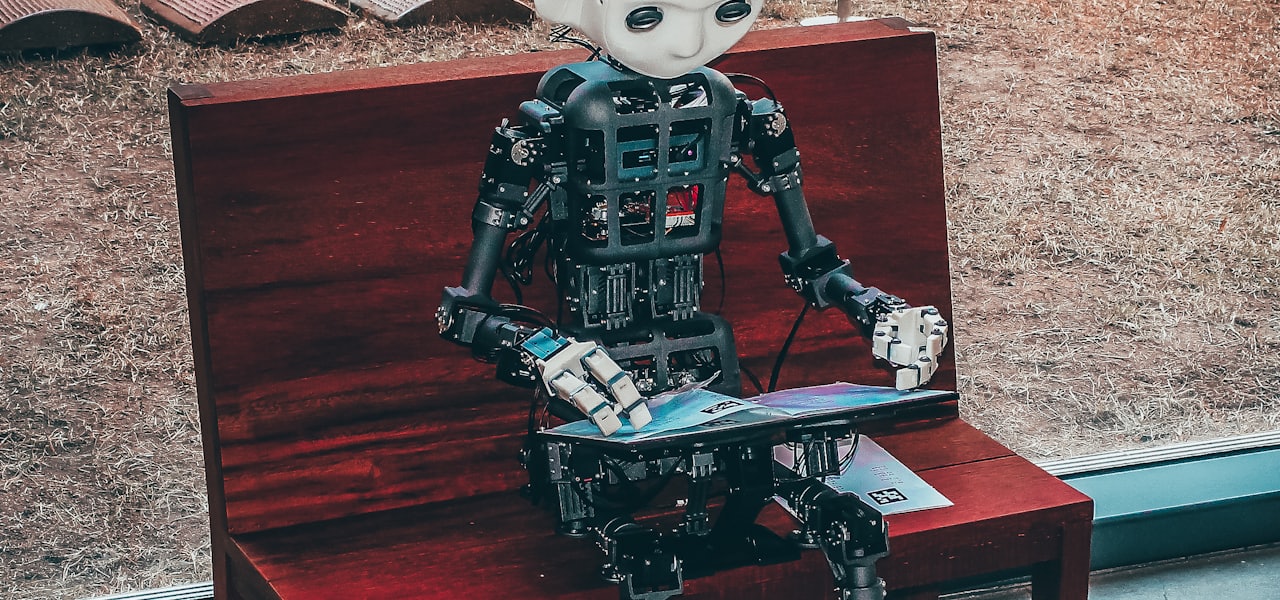
An autonomous agent is an artificial intelligence (AI) system that can perform complex tasks independently. == Definitions == There are various definitions of autonomous agent. According to Brustoloni (1991): "Autonomous agents are systems capable of autonomous, purposeful action in the real world." According to Maes (1995): "Autonomous agents are computational systems that inhabit some complex dynamic environment, sense and act autonomously in this environment, and by doing so realize a set of goals or tasks for which they are designed." Franklin and Graesser (1997) review different definitions and propose their definition: "An autonomous agent is a system situated within and a part of an environment that senses that environment and acts on it, over time, in pursuit of its own agenda and so as to effect what it senses in the future." They explain that: "Humans and some animals are at the high end of being an agent, with multiple, conflicting drives, multiples senses, multiple possible actions, and complex sophisticated control structures. At the low end, with one or two senses, a single action, and an absurdly simple control structure we find a thermostat." == Agent appearance == Lee et al. (2015) post safety issue from how the combination of external appearance and internal autonomous agent have impact on human reaction about autonomous vehicles. Their study explores the human-like appearance agent and high level of autonomy are strongly correlated with social presence, intelligence, safety and trustworthiness. In specific, appearance impacts most on affective trust while autonomy impacts most on both affective and cognitive domain of trust where cognitive trust is characterized by knowledge-based factors and affective trust is largely emotion driven. == Applications == Agentic AI systems: Advanced AI agents that can scope out projects and complete them with necessary tools, representing a significant evolution from simple task-oriented systems. Internet of things (IoT) Integration: Autonomous agents increasingly interact with IoT devices, enabling smart home systems, industrial monitoring, and urban infrastructure management. Collaborative software development: Tools like Cognition AI's Devin aim to create autonomous software engineers capable of complex reasoning, planning, and completing engineering tasks requiring thousands of decisions. Enterprise automation: Business process automation platforms like Salesforce's Agentforce provide autonomous bots for various service functions. == Challenges and considerations == Uncertainty and incomplete information: Autonomous agents must make decisions with limited or uncertain information about their environment and future states. Integration complexity: Incorporating autonomous agents into existing systems and workflows can be technically challenging and resource-intensive. Scalability: As systems become more complex and more agents are used, maintaining coordination and avoiding conflicts becomes increasingly difficult. Trust: Research has shown the combination of external appearance and internal autonomous capabilities significantly impacts human reactions and trust. Lee et al. (2015) found that human-like appearance and high levels of autonomy are strongly correlated with social presence, intelligence, safety, and trustworthiness perceptions. Specifically, appearance impacts affective trust most significantly, while autonomy affects both affective and cognitive trust domains, where affective trust is emotionally driven, and cognitive trust is characterized by knowledge-based factors. Vulnerability to manipulation: Researchers from Harvard, MIT and other educational institutions found that AI agents could become vulnerable to manipulation and could perform detrimental actions in the process of being helpful. == Ethical and regulatory concerns == Accountability: Determining responsibility when autonomous agents make incorrect or harmful decisions remains a complex issue. Privacy and security: autonomous agents often require access to sensitive data, raising concerns about data protection and system security.
Roborace
Roborace was a competition with autonomously driving, electrically powered vehicles. Founded in 2015 by Denis Sverdlov, it aimed to be the first global championship for autonomous cars. From 2017 to 2019, the official CEO was 2016–17 Formula E champion, Lucas Di Grassi, who later became a member of Roborace’s supervisory board. The series tested their technology and race formats at FIA Formula E Championship events during 2016–2018. In 2019 Roborace organized Season Alpha, which consisted of 4 trial racing events with several independent teams competing against each other for the first time. In 2020–21 Roborace held Season Beta with 7 competing teams. All teams utilized the same chassis and powertrain, but they had to develop their own real-time computing algorithms and artificial intelligence technologies. In May 2022, Arrival, the owner of Roborace, confirmed that they were no longer continuing the Roborace programme, but that they were hoping to find alternative funding. In February 2024, after getting its stock delisted from the Nasdaq, Arrival's UK division entered administration, with future plans of a sale of Arrival and all of its affiliated assets. == Cars == === Robocar === The world's first purpose-built autonomous racing car, Robocar, was designed by Daniel Simon, who previously worked on vehicles for movies such as Tron: Legacy and Oblivion, as well as designing the livery for the 2011 HRT Formula One car. Michelin is the official tyre supplier, and the internal computing processors (Drive PX 2) are Nvidia. The chassis itself is shaped like a teardrop, improving aerodynamic efficiency. The car weighs around 1350 kg and is 4.8 metres (16 ft) long and 2 metres (6.6 ft) wide. It has four electric motors, each with a power of 135 kW producing over 500 hp combined, and utilizes a 840V battery. For navigation, it relies on a mixture of optical systems, radars, lidars and ultrasonic sensors. The vehicle has been demonstrated at speeds of almost 300 km/h (190 mph). === DevBot === Development of the Robocar started in early 2016, with a first outing of a test vehicle, the so-called DevBot, following in the summer of the same year. The test car consisted of the same internal units (battery, motor, electronics) used in the Robocar, but were placed in the chassis of a Ginetta LMP3 car without an engine cover in order to provide better cooling and access. DevBot saw its first public outing at the Formula E pre-season tests in Donington Park in August 2016. After battery issues in Hong Kong caused the development team to abandon their demonstration run, the DevBot successfully drove twelve laps around the Moulay El Hassan Formula E circuit in Marrakesh. Other test tracks included Michelin's testing ground in Ladoux and the Silverstone Stowe Circuit. During testing ahead of the 2017 Buenos Aires ePrix, two DevBot cars raced against each other autonomously, resulting in one of the vehicles crashing on a corner. During the 2017–18 Formula E season, Roborace pitched pro-drifter Ryan Tuerck against a DevBot at the Rome ePrix. At the Berlin ePrix, Roborace held the Human + Machine Challenge, the first race for combined teams of human drivers and AIs using a pair of Devbots. === DevBot 2.0 === An upgraded version of DevBot was announced in late 2018, and after private testing made its public debut in 2019 at the inaugural Season Alpha event. DevBot 2.0 uses the same technology as both Robocar and DevBot, with the main changes being a conversion to being driven on the rear axle only, a lower position for the driver for safety reasons and a bespoke composite bodywork. == Seasons == === Testing === ==== 2016–17 Formula E season ==== Roborace appeared at a number of Formula E events during the 2016–17 Formula E season. However, in this period only test drives with two different DevBots took place. Within the framework of the 2017 Buenos Aires ePrix both DevBot vehicles drove against each other on a race track for the first time. There were also DevBot demonstrations at the 2016 Marrakesh ePrix, 2017 Berlin ePrix, 2017 New York City ePrix and 2017 Montreal ePrix. At the 2017 Paris ePrix, the developers also let a Robocar onto the track for the first time, even though the vehicle only drove the track at walking speed. ==== 2017–18 Formula E season ==== At the start of the 2017/18 Formula E season, the Roborace developers once again tested the DevBot during a public time trial between the Roborace CI and the TV presenter Nicki Shields at the 2017 Hong Kong ePrix. As part of a similar time trial at the 2018 Rome ePrix, drift professional Ryan Tuerck also tested the DevBot. The Human + Machine Challenge was created for the Formula E race on the Berlin ePrix. A team of doctoral students from the Technical University of Munich (TUM) and the University of Pisa programmed the software for the Devbot to drive autonomously around the circuit in Berlin. Afterwards both teams in combination with a human driver competed in a public time trial. The vehicle of the team of the Technical University of Munich finished the Human + Machine Challenge with an average lap time of 91.59 seconds, almost four seconds faster than that of the University of Pisa with 95.36 seconds and thus won the Challenge. At the Goodwood Festival of Speed, Robocar became the first ever fully autonomous race car to complete the Goodwood Hill Climb. The vehicle completed the first official autonomous run on 13 July 2018 within the framework of the event. === Season Alpha (2019) === Season Alpha took place at various locations in Europe and North America with the aim of testing several competition formats using the new DevBot 2.0. The first event was held at the Circuito Monteblanco in Spain, and featured the first race between two fully autonomous cars. The events were not broadcast live, instead short clips on YouTube were released. Two teams were competing: Arrival and the Technical University of Munich. On 7 July 2019, the Roborace DevBot 2.0 car set the first ever autonomous official timed run at Goodwood Festival of Speed, with a time of 66.96 s and a top speed of 162.8 km/h (101.2 mph). This is currently the record for autonomous vehicles. Roborace also set the Guinness World Record for having the fastest autonomous car in the world. The Robocar reached a speed of 282.42 km/h (175.49 mph). === Season Beta (2020–21) === The second testing season took place at various locations between September 2020 and October 2021, featuring 16 races and involving mixed reality elements dubbed "Roborace Metaverse", which is based on Roborace's patented technology. The program of Season Beta competitions has gradually complicating rules arranged in a progression of so-called missions. Each mission consists of two racing rounds — one round per day. A mission plan issued by Roborace for each mission defines its objectives, rules, and point-scoring system. The key objective of Season Beta is to come to the point when the majority of competing teams have developed sufficient capability for wheel-to-wheel racing in Season 1. There were 7 teams competing in Season Beta: Arrival Racing (UK/Russia), Autonomous Racing Graz (Austria), MIT Driverless (United States), Acronis SIT (Switzerland), University of Pisa (Italy), PoliMOVE (Italy), CMU (United States).